Drug Driving
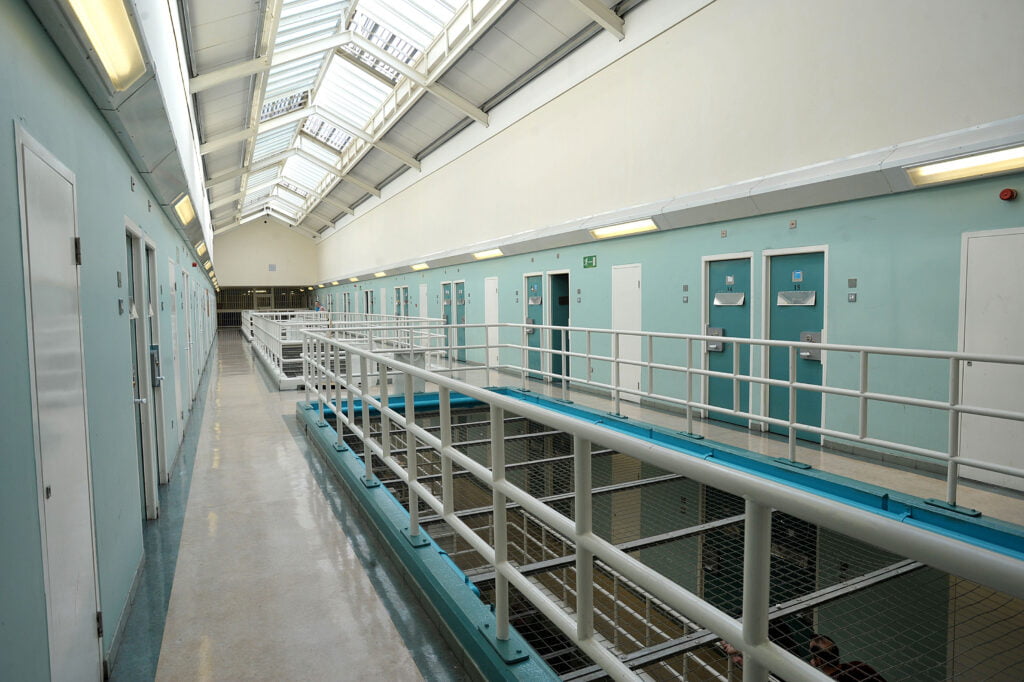
Table of Contents
What is drug driving?
In Ireland, it has been a criminal offence since 1961 to drive a mechanically propelled vehicle while under the influence of drugs to the extent that you do not have proper control of the vehicle. (REF 1) Furthermore, new drug driving laws were introduced into drug driving legislation in 2017 which made it a criminal offence to drive while over the prescribed limit of three specified drugs. These drugs are Cannabis, Cocaine and Heroin. If you are found to have any of these drugs in your system over the specific limits, you can be prosecuted and the State does not need to prove that your driving was impaired as a result of these drugs being in your system.
How does someone get caught drug driving?
Various powers are conferred on the Gardai to assess whether or not someone is drug driving. Drug driving legislation allows the Gardai to conduct what is known as ‘Preliminary Drug Testing’ at Mandatory intoxication testing checkpoints. Essentially, the Gardai are allowed to set up mandatory checkpoints to conduct roadside testing. This process allows the Gardai to sample an individual’s oral fluid for cannabis, cocaine, opiates and benzodiazepines.
The Gardai are also given powers to conduct impairment tests. This is where they carry out the following tests for the purposes of assessing whether a driver’s ability to drive their vehicle is impaired:
- Pupil dilation test;
- Modified Romberg balance test (this is where you will be required to tilt your head and close your eyes and hold that position for 30 seconds);
- Walk and turn test;
- One-leg stand test;
- Finger to nose test;
It is also open to the Gardai to arrest someone on the suspicion of drug driving, if this happens, you will be brought back to the garda station and will be required to provide either a breath, blood or urine sample.
What happens if I am caught drug driving?
If you have provided an oral sample at a roadside test which has positively indicated the presence of drugs, you will be arrested and brought to a garda station. The gardai will then require either a blood or urine sample from you and to do this, they will have to call a designated doctor to retrieve the sample. It is a criminal offence to fail to provide this sample when required.
Once the sample has been taken, it will be sent to the Medical Bureau of Road Safety to be tested. You will also be given a portion of the sample in case you wish to have it independently tested but you are not required to do so. You will not be charged until the results of this test are available and indicate that you did indeed act in a manner contrary to drug driving legislation.
If you are charged, you will more than likely receive a summons which will require you to attend court at a later date. This will be the beginning of the proceedings against you.
What happens if I am charged with drug driving?
If you are charged with drunk driving, this is the start of the legal proceedings against you and you will be required to attend Court and answer the charges of driving under the influence of drugs against you.
Your first court appearance is when you will be legally charged with the drug driving offence and it will be read out to you in detail by the Gardai. It would be par for the course for you to seek disclosure on this date. Disclosure is the gardai’s evidence against you. If the gardai hands over the disclosure to you, your case will be adjourned to allow you to consider same and develop a strategy for your next steps. If the gardai do not hand over disclosure on this date, your case will be adjourned and you should receive it on the next occasion.
On your second court appearance (provided disclosure was received on the last day) you have two routes to choose from. You can either plead guilty and the Judge will proceed to sentencing, or you can indicate that you are pleading not guilty and you will be given a hearing date which will take place sometime in the future.
Your third court appearance will be your trial date. The Judge will hear and consider all of the evidence before finding you either guilty or not guilty.
Do I need a Solicitor?
While there is nothing in place to make you hire a drug driving solicitor, it is strongly advised that you consider this course of action. Being charged with drug driving offences can be a very daunting process, especially for someone who is not familiar with the Irish legal system. Even more so, the penalties for drug driving offences have extremely serious consequences that have the potential to significantly disrupt the foundation of your daily life. You will automatically be disqualified from driving and there is a very real possibility that you might be required to serve time in prison.
Drug driving lawyers are specialists in their field. Not only are they familiar with drug driving legislation, but drug driving solicitors have spent years in education to ensure that they are experts who are able to provide you with the best defence possible. Drug driving charges in Ireland can be very technical in nature as there are specific steps that the prosecution must follow and satisfy, and so even if you are caught driving high or driving under the influence of drugs, your drug driving solicitor will be able to identify any weaknesses in the prosecution’s case that will aid in your defence.
By having a drug driving solicitor on your side, you are increasing your chances of getting through a difficult process more smoothly. You are giving yourself the opportunity to be represented by someone who knows the legal ropes and who will do their best to get you the best result possible.
Can I fight a drug driving case?
You can fight a drug driving case. It is up to the State to prove your guilt beyond a reasonable doubt, you are not under any obligation to plead guilty. The decision is yours to choose to fight the charges against you.
How do I fight a drug driving case?
It is advised that you engage the services of a drug driving solicitor if you are choosing to contest the drug driving charges against you. This is because they will be best placed to fight the case on your behalf as they will be aware of what defences are available to you. It is not possible to form a complete list of possible defences as all drug driving cases are different, but the following comprises some of the more common defences available:
- Medical exemption;
- Involuntary intoxication;
- Legal guidelines not followed accordingly;
- Incorrectly charged with the wrong offence;
- Missing essential documents;
- Unavailability of essential witnesses.
What happens if I plead guilty to drug driving or if I am convicted by a Judge? (H2 Tag on the backend)
If you plead guilty to driving on drugs charges, or if you are found guilty by Judge, you will be duly convicted, and the Judge will proceed to sentencing. Please continue reading to see what penalties may be imposed on you for convictions for drug driving.
What are the penalties for drug driving?
The penalties for drug driving offences are as follows:
- A fine of up to €5,000.00;
- A prison sentence for up to six months;
- A mandatory disqualification period – new drug driving laws mandate that this will be for a minimum term of one year if you are found to be above the legal threshold for cocaine, cannabis or heroin and a minimum of four years if you are found to be impaired to the extent that you do not have proper control of your vehicle as a result of the drugs in your system;
- Your conviction will also form part of your criminal record.
It is important to note that the only mandatory penalty is the disqualification order, the fine and term of imprisonment are discretionary in nature.
Will I go to prison if I am convicted of drug driving?
It is possible that you could go to prison if convicted of drug driving offences. However, as stated above, this is not a mandatory penalty and so it is up to the Judge’s discretion.
Generally speaking, prison sentences are reserved for the most serious offences or for repeat persistent offenders. If this is your first drug driving offence, it is very unlikely that you will go to prison.
Aside from any previous convictions and the seriousness of the offence, the court will consider various other factors when deciding whether or not to impose a term of imprisonment. These include the offender’s attitude to having committed the offence and the level of intoxicant found in their system.
If you are sentenced to prison, you can lodge an appeal and in the normal course, you will be released from custody pending appeal.
Will I lose my job if I am convicted of drug driving?
This is a possibility. Especially if your job is dependent on you having a full drivers licence as if you are convicted of drug driving offences, you will automatically be disqualified from driving.
Will I get a criminal record if I am convicted of drug driving?
A conviction for drug driving generally results in the convicted person getting a criminal record. There is a mechanism to avoid a criminal record called the fixed penalty procedure, but so far, that is only applicable to drink driving offences as opposed to drug driving offences.
Can I get my licence back early?
Under certain circumstances, it is possible to get your licence back early. This is done by making an application to have your driver’s licence restored. However, you can only apply to have your licence restored when you have completed at least one half of the length of your disqualification order. Furthermore, your licence will not be restored until at least two-thirds of the disqualification order has been served by you.
Will I be able to get insured when I get my licence back?
Yes, you are entitled to be insured when you get your licence back. If you find yourself in the unfortunate situation where you were disqualified from driving and now cannot get insurance, you can contact the Financial Services and Pensions Ombudsman (FSPO )who will investigate your complaint.
Can I appeal if I am convicted of drug driving?
Yes, in the context of a drug driving conviction in Ireland, you are entitled to appeal your case from the District Court to the Circuit Court as a matter of course. In most situations, if you have been found not guilty of a drug driving offence, the prosecution cannot appeal that decision to the Circuit Court.
If it is your intention to appeal, this must be done within 14 days of the date of the decision you are appealing. Therefore, it is advised to engage the services of a drug driving lawyer to ensure that the correct process is followed.
If you do decide to lodge an appeal, the District Court will fix recognisance, which is usually a financial sum. This is essentially you giving your word to the Court that you will attend Court on the next occasion if you do decide to appeal. On entering into a recognisance, the District Court will place a ‘stay’ on the order you are appealing. This just means that a pause is placed on the order and it will not yet come into effect. Practically, this means that any penalties imposed on you in the District Court will not start until your appeal has been heard. This is the case whether the penalty is a disqualification order, a term of imprisonment or a fine.
The appeal itself will be ‘de novo’ which means that it will be a completely new hearing. The Circuit Court’s finding on appeal will be final and cannot be appealed.